Wet vs. Dry Mop: Safety and Hygiene Considerations
If you run a business, you’ve probably grabbed whatever mop was closest and got to work. But wet mops and dry mops aren’t interchangeable. Using the wrong one can leave floors dirtier, create slip hazards, or spread bacteria around instead of cleaning it up.
Most facilities need both. The trick is knowing when to use each one.
At Garden State Mat Rental, we help businesses across New Jersey, Pennsylvania, and Delaware keep floors clean without the hassle. Our mop rental service delivers freshly laundered mop heads on a regular schedule so you always start with sanitary tools.
No washing, no storage, no guessing if they’re actually clean.
What Dry Mops Do Best
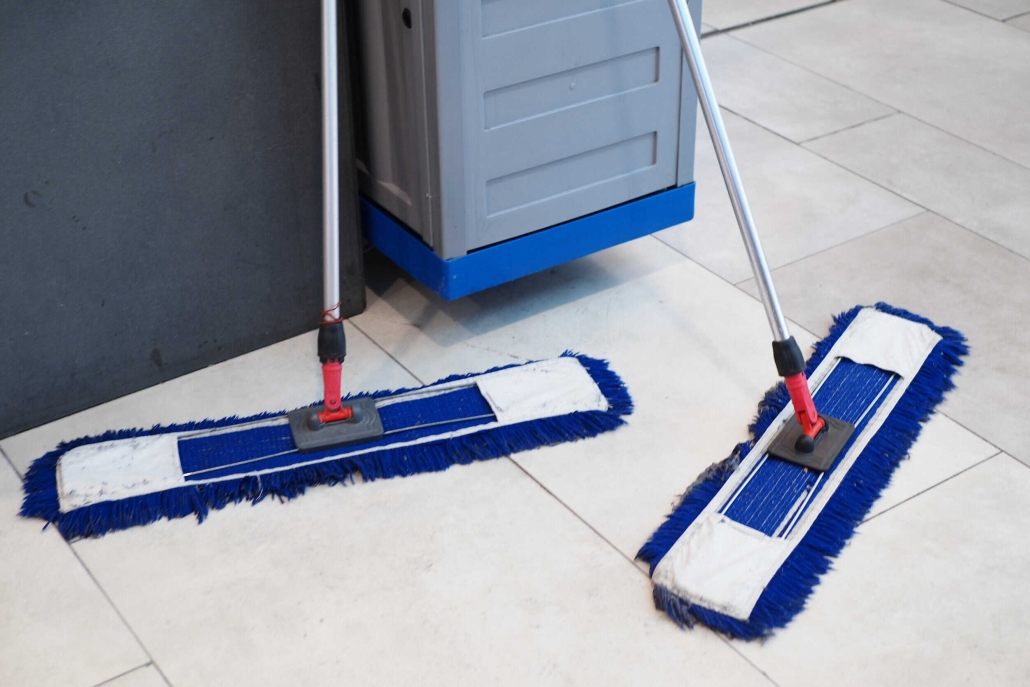
Dry mops handle the first layer of cleaning. They collect dust, grit, and loose soil that gather on floors throughout the day. This step matters because debris becomes slippery as soon as moisture touches it.
When dry mops are the safer choice
- Clearing dirt before wet mopping
- Picking up grit in entryways and hallways
- Maintaining floors between full cleanings
- Reducing scratches on tile or finished surfaces
Dry mopping keeps the floor stable and prepares it for deeper cleaning later. When businesses stay current with this step, their floors stay cleaner for longer.
What Wet Mops Are Designed to Handle
Wet mops reach what dry mops cannot. They lift spills, grease, and sticky residue that sit on the surface. Wet mopping also helps remove bacteria and buildup that affect hygiene in kitchens, medical offices, and restroom areas.
When wet mops are necessary
- After spills or tracked-in liquids
- During end-of-day cleaning
- When sanitizing floors
- When grease or residue forms in work zones
Wet mops improve cleanliness, but only when floors are given time to dry. A wet floor during busy hours increases slip risks, so timing becomes important.
Safety Differences Between Wet and Dry Mopping
Wet and dry mops impact safety in different ways, and using one incorrectly can cause accidents.
Dry mops improve safety by removing abrasive particles before moisture turns them into slip hazards. They keep grit under control and prevent dirt from spreading across floors, protecting floor finishes from scratches and wear.
Wet mops improve sanitation but introduce moisture. Research published in Applied Microbiology found that mops stored wet support bacterial growth to very high levels and could not be adequately decontaminated by chemical disinfection alone.
CDC guidelines warn that if mopping water isn’t changed regularly (after every three to four rooms), the procedure can actually spread heavy microbial contamination throughout the facility.
That’s why our team often advises customers to rely on dry mopping during the day and wet mopping during slower periods or after closing.
Hygiene Differences and the Role of Laundering
A mop works only as well as its cleaning cycle. Reusing the same mop head without proper laundering spreads bacteria and leaves residue behind. Many facilities struggle with this step because in-house washers cannot remove grease or heavy soiling.
We solve this problem by supplying fresh mop heads and removing used ones for professional laundering. Our cleaning process pulls out dirt and contaminants so each mop returns ready for safe, hygienic use.
How Clean Mats Support Both Mopping Methods
A floor care routine works best when mats reduce the amount of soil reaching the floor in the first place. Clean mats at entrances capture much of the moisture and grit that wet and dry mops would otherwise have to manage.
When we rotate clean mats into your facility, your team sees fewer puddles, less debris, and fewer slippery patches forming between cleanings. This helps both mopping methods work more effectively.
What businesses notice with a reliable mat program
- Fewer slip hazards at entry points
- Less soil spread across the building
- Shorter end-of-day cleaning time
- Floors that stay in better condition over time
Mats, dry mops, and wet mops work together, each supporting the next step.
Building a Floor Care Plan That Fits Your Facility
Different facilities need different routines. A restaurant deals with grease and spills. A medical office focuses on sanitization and cleanliness standards. A retail store sees heavy foot traffic that brings grit inside every hour. Our team helps businesses match the right tools to the right spaces so they stay clean and safe.
We look at how your floors are used, when your busiest times occur, and where moisture tends to collect. Then we create a plan that places mats correctly and brings in mop service that supports real-world needs.
What we evaluate during a site walkthrough:
- Traffic patterns: Where do people enter, exit, and move through most often?
- Floor types: Tile, concrete, carpet, or a mix of surfaces that each need different care
- Problem areas: Entryways that pool water, kitchens with grease buildup, hallways that show wear
- Seasonal challenges: Salt and slush in winter, rain and mud in spring, dust and dirt in summer
- Staff workload: How much time your team can realistically spend on floor maintenance
From there, we recommend the mat types and placement that make sense. A restaurant might need anti-fatigue kitchen mats near prep stations and high-absorbency mats at entrances. A medical office might focus on entrance mats that trap contaminants before they reach patient areas.
The goal is simple: fewer floor problems, less cleaning time, and a space that stays safer throughout the day.
Partner With Garden State Mat Rental for a Safer Floor Care Routine
If your business wants a clearer understanding of wet mop vs dry mop and a service that supports both, we can help. Our team provides clean mats, fresh mop heads, and reliable laundering that keeps your floors safe and sanitary.
Contact Garden State Mat Rental today to request a quote and learn how our services can improve your daily cleaning routine.

